Antebellum Deep South and The Trail of Tears: Researching SHOWBOAT SOUBRETTE
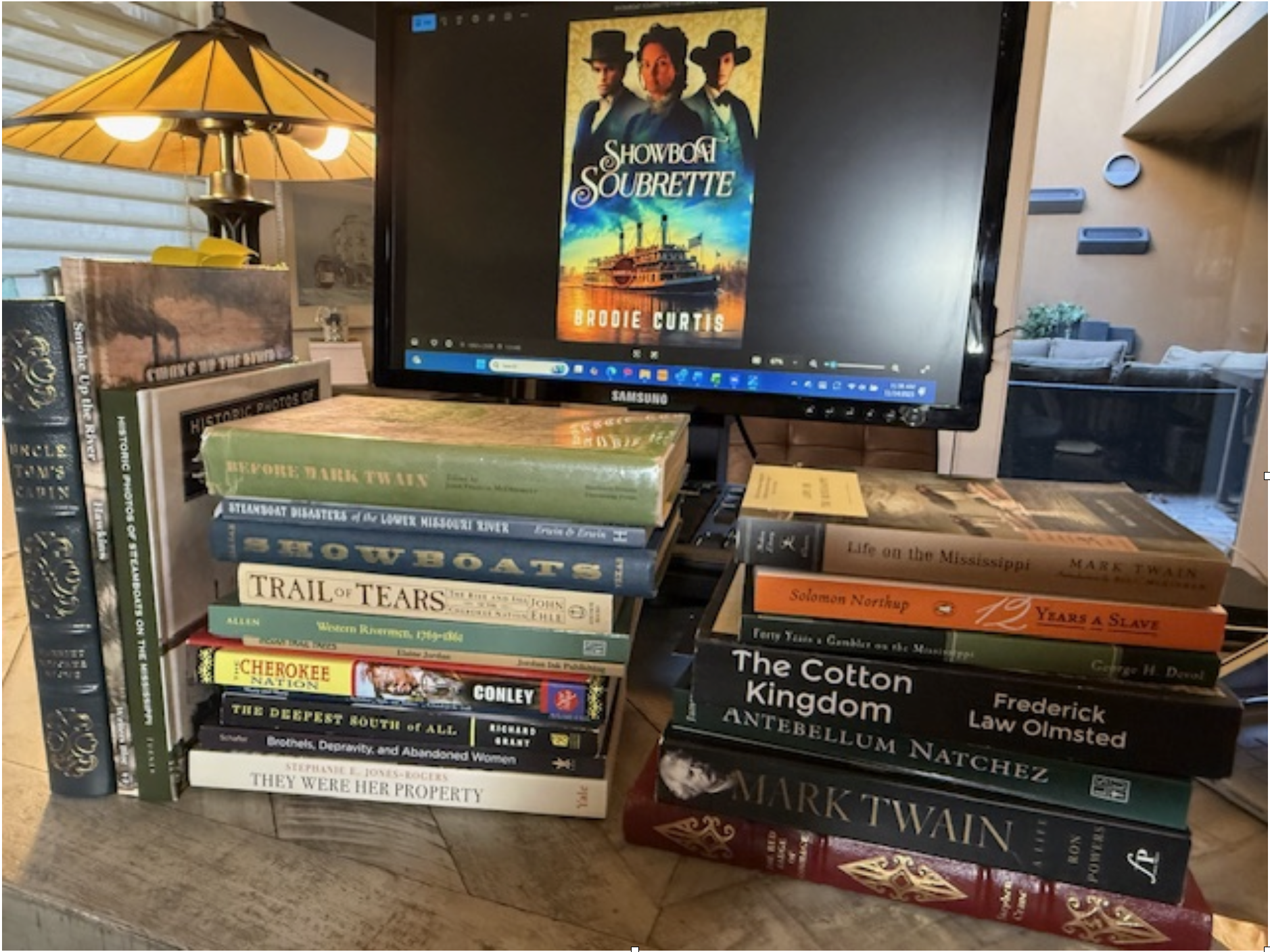
SHOWBOAT SOUBRETTE is my third historical novel set in the riverboat era on the lower Mississippi River prior to the Civil War. To learn about the period, I dug into a variety of research sources that are listed below. I truly got energized to tell my story by taking a drive along the Big Muddy, from Hannibal down to Natchez, stopping frequently at historical sites, and along the river itself. Had to feel it!
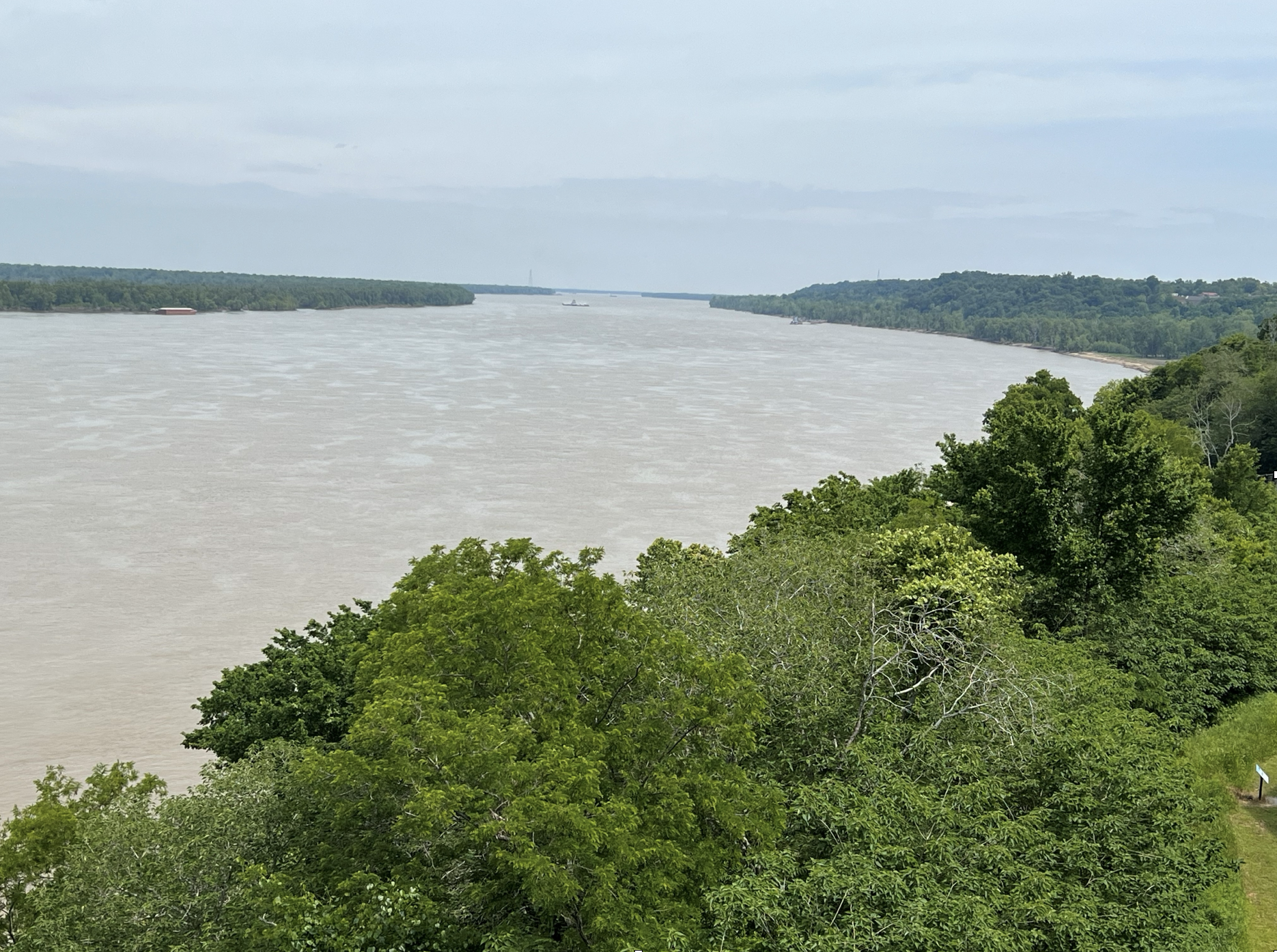
Brodie Curtis Looks Upriver from Natchez
UNDERSTANDING THE ANTEBELLUM DEEP SOUTH:
Romanticism of the Antebellum American Deep South could be found in the pageantry of the attire worn by the privileged, and in the heady adornment of passenger-hauling riverboats that paddle-wheeled the Mississippi. But it exhibited almost unbelievable cruelty in its institution of slavery and in the bigoted attitudes of the times. And in its violence. Perhaps the first title listed below, Olmsted’s The Cotton Kingdom illuminates these contradictions best.
Olmsted, F. (1861). The Cotton Kingdom: A Traveller’s Observations on Cotton and Slavery in the American Slave States 1853-1861.
McDermott, J. (“Edited with an Introduction and Forward”) ( 1968). Before Mark Twain: A Sampler of Old, Old Times on the Mississippi.
Stowe, H.B. (1852). Uncle Tom’s Cabin.
Northup, S. (1853). 12 Years a Slave.
Devol, G. (1894). Forty Years a Gambler on the Mississippi.
Jones-Rogers, S. (2019). They Were Her Property: White Women as Slave Owners in the American South.
James, D.C. (1968). Antebellum Natchez.
Kelleher Schafer, J. (2009). Brothels, Depravity, and Abandoned Women: Illegal Sex in Antebellum New Orleans.
Sharp, A. and Sharp, G. (2009). Antebellum Myths and Folklore: A Search for the Truth.
Grant, R. (2020). The Deepest South of All: True Stories from Natchez, Mississippi.
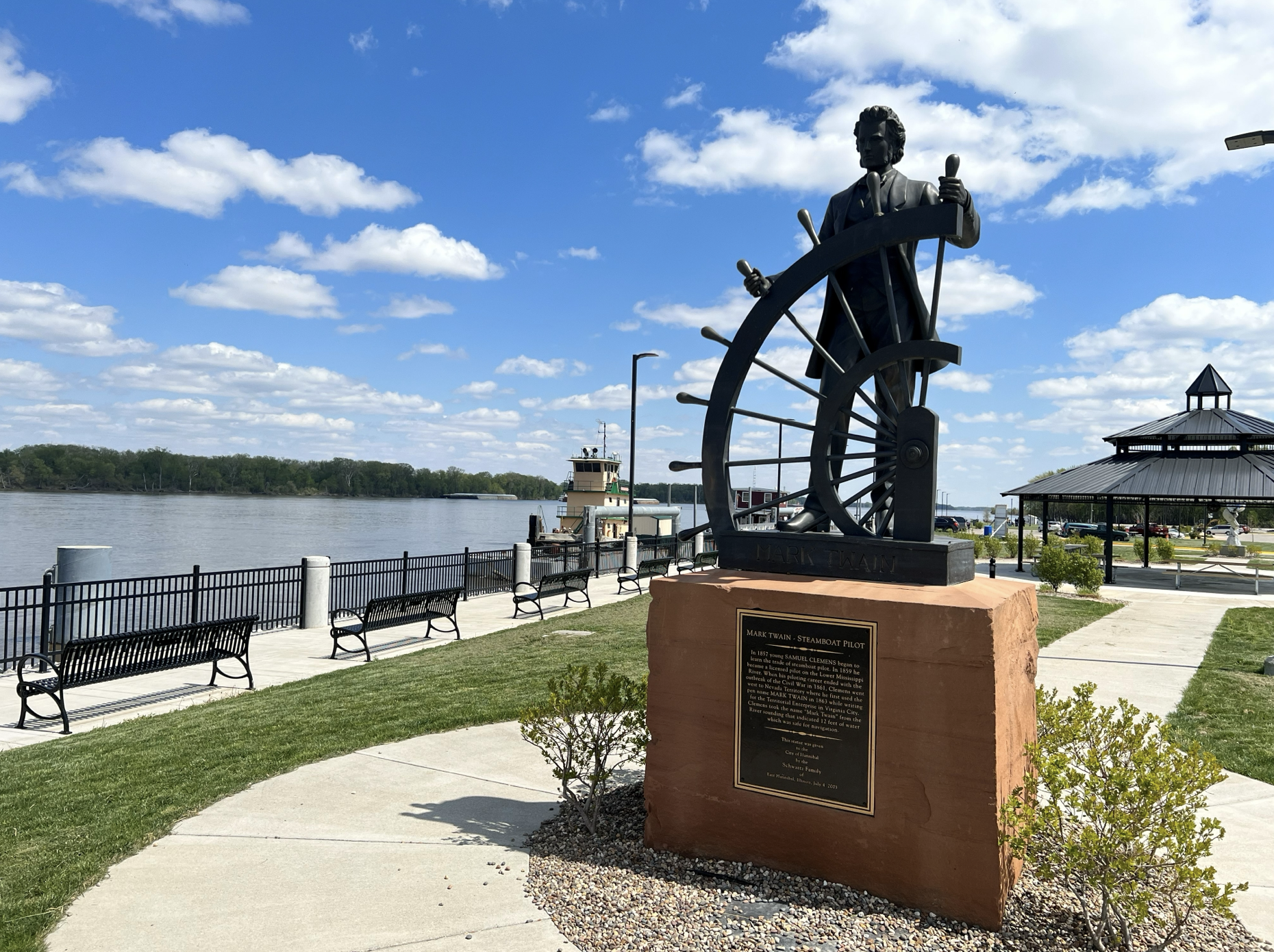
Brodie Curtis took in the Mark Twain Attractions in Hannibal MO
RIVERBOATS:
Is there a more majestic image than a multi-decked steamboat gliding on the river, smoke billowing from its stacks while water clicks over its paddles? Yet idyllic portraits belied the dangers, from collisions and boiler explosions to snags, sandbars, fire and ice and other in climate conditions. Thousand of boats ended up at the bottom of the river. Mark Twain’s memoir of his cub pilot days and old images in many of the sources below sparked my imagination.
Twain, M. (1883). Life on the Mississippi.
Powers, R. (2005). Mark Twain: A Life.
Shapiro, D. (2009). Historic Photos of Steamboats on the Mississippi.
Graham, P. (1951). Showboats: The History of an American Institution.
Allen, M. (1990). Western Rivermen, 1763-1861: Ohio and Mississippi Boatmen and the Myth of the Alligator Horse.
Lloyd, J. (1855). Lloyd’s Steamboat Directory, and Disasters on the Western Waters.
Hawkins, V. (2016). Smoke up the River: Steamboats and the Arkansas Delta.
Berger Erwin, V. and Erwin, J. (2020). Steamboat Disasters of the Lower Missouri River.
Sandlin, L. (2010). Wicked River: The Mississippi When it Last Ran Wild.
Buck, R. (2023). Life on the Mississippi: An Epic American Adventure.
THE CHEROKEE NATION AND THE TRAIL OF TEARS.
The Cherokee nation occupied a wide area of the Southeastern United States Eastern Woodlands until its forceable removal to Oklahoma in 1838. My readings gave me a great admiration of a proud people and at the same time sadness at their treatment originated by President Jackson’s government.
Conley, R. (2005). The Cherokee Nation: A History.
Ehle, J. (1988). Trail of Tears: The Rise and Fall of the Cherokee Nation.
Underwood, T.B. (1956). Cherokee Legends and the Trail of Tears.
Jordan, E. (1997). Indian Trail Trees.